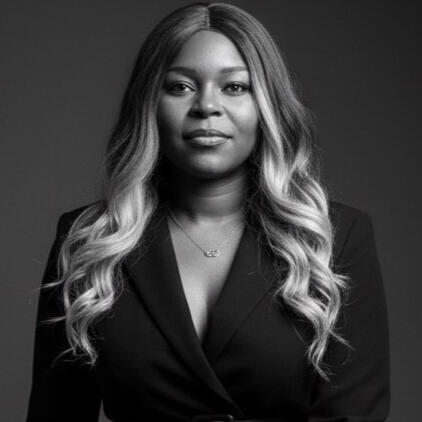
shani b.b. jones
Lifestyle Strategist | Transformation Leader | Alignment Framework Creator
Strategy for people, organizations, and systems in transition.
I help people and organizations recognize what's not working, make intentional decisions, and redesign the systems, strategies, and behaviors that move them forward.
My work bridges executive leadership, organizational transformation, and human systems navigation—turning complexity into practical strategies for meaningful change.
About Shani
I am a problem solver.For more than 20 years, I’ve worked at the intersection of people, systems, and change. My background spans executive leadership, organizational transformation, technology and operations, strategic execution, education, and human systems navigation.The environments may look different, but the common denominator has always been people.Human Systems Are EverywhereOrganizations are human systems.
So are relationships, families, workplaces, communities, and the lives we build for ourselves. Wherever people interact, we are navigating communication, choice, boundaries, expectations, power, and change.When those systems work, we may barely notice them. When they don't, the impact rarely stays contained to one area.A communication problem can become a leadership problem. A boundary problem can affect a relationship, a career, or both. An unexamined expectation can influence how someone approaches sex, success, family, leadership, or identity. Organizations can continue operating from outdated assumptions just as easily as individuals can.Different problems. Different lanes. Human systems underneath them all.What I DoI solve problems by looking beyond the symptom.That means examining what is happening, what is sustaining it, who or what is affected, where communication, choice, or boundaries are influencing the system, and what would actually have to change to produce a different result.For organizations, that may mean navigating transformation, strengthening operations, improving execution, or addressing the human dynamics affecting change.For individuals, it may mean examining a relationship, career decision, communication breakdown, boundary, sexual concern, or life transition that is negatively affecting how they live or work.I don't assume the answer before understanding the problem.
That is human systems navigation.Why I Do ItToo many problems continue because we've learned to operate around them.People adapt to relationships, workplaces, expectations, behaviors, and systems that no longer work. Organizations do the same. Eventually, what we tolerate becomes part of how the system operates—even when it is costing us personally, professionally, operationally, or relationally.I created the Alignment Framework to interrupt that pattern.Through Communication, Consent and Boundaries (CCB) and Recognize, Reclaim and Redesign (RRR), Alignment provides a structured way to examine the human dynamics surrounding a problem, make conscious choices about what comes next, and translate those choices into action.My work isn't limited to one kind of problem because people don't experience their lives in isolated categories. What happens in one lane can affect every other lane.I help people stop operating around problems and start working them.
Professional Leadership
Solving Problems at Organizational ScaleFor more than two decades, I have led and supported transformation inside complex, mission-driven organizations where people, process, technology, policy, and execution intersect.My approach begins with understanding how work actually happens—not simply how it was designed to happen. I look for the gaps between the two, identify what is creating friction or limiting results, and develop solutions that make the system work better for the people responsible for operating within it.The examples below represent that work in practice.
________________________________________
Building a Better Entry Into the OrganizationThe Challenge
Across District government, there was no consistent agency-level standard for how new employees should be onboarded and prepared to operate successfully within their organizations.The Response
I led a DCHR project team in developing and implementing a District-wide New Employee Orientation standard that established minimum onboarding requirements, including required training, early performance-plan development, and a 90-day buddy component designed to help employees navigate agency culture as well as formal expectations.The Impact
The standard created a more intentional approach to bringing people into District service—addressing not only what employees needed to know, but how they learned to successfully operate within the human system around them.
________________________________________
Creating Pathways for People to AdvanceThe Challenge
Employees interested in moving into management needed more than technical competence. They needed opportunities to develop and practice the skills required to lead.The Response
At the Office of Unified Communications, I established the OUC IT Academy to provide employees with structured management development, combining training with opportunities to practice and demonstrate leadership capabilities.The Impact
Participants gained practical preparation for advancement, with several employees subsequently earning internal promotions into higher-level roles.
________________________________________
Turning Fragmented Work Into an Operational SystemThe Challenge
OUC's procurement lifecycle involved numerous internal approvals before transactions entered the District's enterprise procurement system, followed by requisition, purchase order, invoice, payment, and vendor-management activities. Critical information was being managed through disconnected manual processes, making the overall lifecycle harder to track and manage.The Response
I gathered the business and operational requirements and designed a Quickbase application that centralized the workflow and associated data. I built the underlying tables and system requirements and implemented a solution that captured internal approvals alongside requisition, purchase order, invoice, and vendor-management information.
The resulting data also supported performance reports and executive dashboards.The Impact
The solution transformed a fragmented process into a more visible and manageable operational system. Its success led other areas—including HR, 911, and 311 operations—to bring additional day-to-day business challenges to me and, eventually, my team for application development and process automation.
________________________________________
Building Governance Across a Fragmented Technology EnvironmentThe Challenge
District agencies were making technology purchases independently, sometimes acquiring separate licenses for the same products without visibility into existing contracts or purchases elsewhere in government. The fragmentation made it difficult to leverage the District's collective buying power, consolidate licensing, manage renewals, and consistently ensure technology investments aligned with OCTO standards. No District-wide governance body existed to bring those decisions together.The Response
I was part of the team that established the District-wide Technical Review Board from the ground up. We developed its charter, defined its operating and approval requirements, and created a governance model that brought CIOs from across District government into the decision-making process rather than concentrating decisions solely within OCTO. We also established distinct review requirements for capital technology projects to account for their additional complexity and investment considerations.The Impact
The TRB created a shared governance structure for technology investments across the District—giving agencies and OCTO a mechanism to evaluate proposed purchases collectively, identify opportunities to leverage existing investments and contracts, and ensure technology decisions supported broader District standards and priorities.
________________________________________
Additional Leadership Scope
My broader leadership experience includes mission-critical 24/7 operations, organizational and technology transformation, workforce development, business continuity, enterprise procurement, vendor management, CRM modernization, governance, strategic planning, and data-informed performance management.That work has included managing significant technology and procurement portfolios, developing enterprise acquisition strategies, leading cross-functional initiatives, and helping organizations translate strategic priorities into operating reality.
________________________________________
The Common ThreadThe scale and setting of the problem may change, but one lesson has remained consistent:Systems don't change independently of the people operating within them.Technology, process, policy, structure, and strategy matter. But whether change actually works depends on how people communicate, make decisions, understand expectations, navigate boundaries, adopt new behaviors, and operate within the system around them.That understanding is at the center of my approach to human systems navigation—and helped shape the thinking behind the Alignment Framework.
The Alignment Framework
When something feels off, figuring out what to do starts with understanding what is actually happening.I created the Alignment Framework as a practical approach to human systems navigation—a way to examine problems that involve people, expectations, choices, behaviors, relationships, and change.Alignment starts from a simple premise:You can't work a problem you haven't acknowledged and articulated.Sometimes the problem is obvious. Often, it isn't.You may know that a relationship isn't working, that your career no longer fits, that communication keeps breaking down, that a boundary continues to be crossed, or that you're living according to expectations you no longer believe in.You feel the impact before you fully understand the system producing it.Alignment provides a structured way to slow that process down.The Lens: Communication, Consent & BoundariesHuman systems are shaped by how people communicate, what they knowingly or unknowingly agree to participate in, and the boundaries that define what is acceptable.Communication
What is being said? What isn't? What is assumed, misunderstood, avoided, or left unclear?Consent & Choice
What are you actively choosing? What have you accepted by default? Where are expectations, pressure, habit, or circumstance influencing the choices being made?Boundaries
What limits, expectations, responsibilities, and consequences exist? Are they understood? Communicated? Respected? Enforced?Together, CCB provides a lens for examining what may be sustaining the problem beneath the surface.The Process: Recognize, Reclaim & RedesignOnce we can see the problem more clearly, we can work it.RECOGNIZEAcknowledge it. Articulate it. Understand it.Identify what isn't working, how it is affecting you or the system around you, and what is actually sustaining the problem.RECLAIMClarify. Choose. Commit.Examine the available options, separate intentional choice from inherited expectations or automatic behavior, and consciously decide what comes next.REDESIGNIdentify. Plan. Execute. Review. Adjust.Translate the decision into tangible behavioral or systemic change, then evaluate and adjust based on what happens.Different Problems. Same Process.
Alignment isn't limited to one area of life because people don't experience problems in isolated categories.It can be used to examine challenges involving:Relationships • Sexuality • Career • Leadership • Communication • Boundaries • Family • Identity • Decision-Making • Life TransitionsA career problem can affect a relationship. A relationship problem can affect work. A communication problem can become a leadership problem. An inherited expectation can influence choices across multiple areas of life.The presenting issue may change.The work is learning how to recognize the problem, reclaim intentional choice, and redesign what happens next.
Work with me
Private Alignment Coaching
For individuals navigating a problem, decision, transition, or pattern that isn't working.
Using the Alignment Framework, we'll examine what's happening, understand what's sustaining it, clarify your options, and develop a practical strategy for what comes next.
Speaking & Workshops
For organizations, teams, conferences, and communities ready for a different kind of conversation.
I speak and facilitate interactive experiences around human systems, communication, boundaries, power, sexuality, change, decision-making, and Alignment—connecting big ideas to the choices and behaviors people navigate every day.
Strategic Advisory
For organizations facing a problem that doesn't fit neatly into a box.
I work with leaders to examine complex operational and human-system challenges, identify what is sustaining the problem, and develop practical strategies for moving forward. Engagements may include problem assessment, process and operational review, transformation strategy, organizational effectiveness, technology enablement, or facilitated strategic problem-solving
Featured work
Ideas, research, and resources exploring the human systems that shape how we communicate, choose, relate, and change.
Unlearning Sexuality
The 5 Lies That Sustain Adult Misalignment
An exploration of the learned scripts, expectations, and assumptions that influence how adults understand sexuality and make choices about their lives. Unlearning Sexuality examines how those messages can create misalignment—and what becomes possible when we begin questioning what we were taught.
The 5 Lies
Alignment Masterclass Series
Five conversations challenging common messages about sexuality, relationships, communication, strength, aging, and what we're supposed to already know. The series invites adults to examine the scripts they've inherited and decide whether those scripts still belong in the lives they're creating.
F*ck Around & Find Out: Because I Deserve Better — Volume 1
Before the Alignment Framework had a formal structure, FAFO was already asking the questions at its core.
This provocative, interactive book challenges the scripts people inherit about love, sexuality, worth, pleasure, and power—and asks what happens when you stop tolerating what isn't working and start choosing differently.
Raw, reflective, and unapologetic, FAFO is an invitation to question what you've been taught and consider what you actually want.
Credentials & Expertise
Education
Master of Public Administration
University of the District of Columbia
Leadership
Certified Public Manager (CPM)
Certified ScrumMaster (CSM)
Certified Strategic Project Manager (CSPM)
ITIL v3 Foundation
Behavioral Science
Certified Multidisciplinary Practitioner (CMP)
Certified Life Coach
Certified Sex Coach
Certified Sex Educator
Master Practitioner, NLP
Crisis Management
Information Technology Service Unit Leader (ITSL)
Communications Unit Leader (COM-L)
FEMA ICS 100, 200, 300, 700 & 800
Shani B.B. Jones | Lifestyle Strategist
LS999 | Lifestyle Strategies for Life
[email protected]